Surfaces · Step 3 of the method
Align everywhere you speak with your canon
Where do the AIs read about you? First where you write yourself: your site, your profiles, your listings. Surfaces keeps that list of official pages, and keeps it in phase with your canon.
A registry, not a guess
An official page is a page about you where you have the final say: the website, the GitHub organization, the LinkedIn page, the X account, the YouTube channel, the Wikidata entity, directories, app stores. The registry tracks them per project, with a per-type checklist ticked language by language, and a status derived from facts: aligned, not aligned yet, or the wording moved since.
- Nine page types, each sheet carrying the languages the page serves
- Alignment is a dated statement of fact, frozen against a canon version in an append-only journal
- When the canon changes, every page that lags shows it: re-propagation becomes a checklist
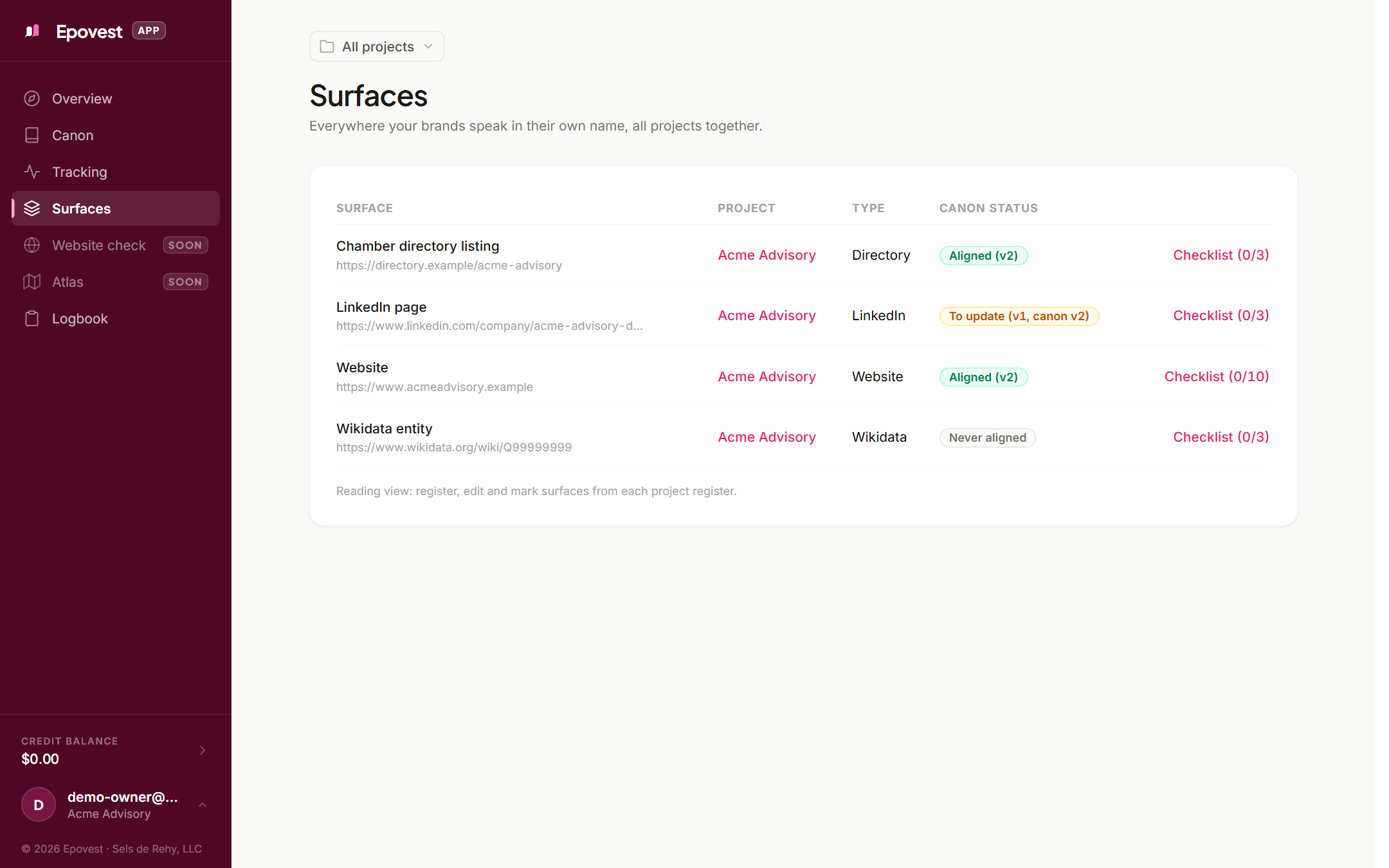
How you align your official pages
Register them
List every place you speak: type, address, languages served. The registry is your map of where your story lives.
Work through the checklist
Each type has its checklist, ticked per language: title tags, descriptions, the llms.txt of a website. It guides the work, item by item.
Verified, dated
Verify each item on the page itself: the canon version and the date are frozen on the cell. When the canon moves on, the status says which pages fell out of phase.
Its place in the method
Surfaces is step 3: your canon exists, your baseline is running, now every place you own should tell the same story. What third parties then repeat is the next step, and your curves say what changed.
Prepaid credits, no subscription: you pay for the checks that run. The whole grid is public.
See pricingCommon questions
What is a surface in AI visibility?
A surface, or official page, is a page about a business where the business has the final say: its website, its GitHub organization, its LinkedIn page, its X account, its YouTube channel, its Wikidata entity, its directory listings, its app store pages. It is the owned half of the story; the pages where someone else has the final say are corroborations, the earned half, and Epovest keeps both registries side by side.
Where do AI assistants read about my business?
On your official pages first: your site and your profiles are what they crawl and quote most readily. Then in the sources they cite when they answer: press, directories, reviews. Your trackers extract those cited sources, so you see which ones actually shape the answers on your market.
Why keep every official page consistent with the canon?
Because the AIs cross-read everything. Five pages telling five variations dilute your story; the same wording everywhere is one story, told in one voice. The registry makes consistency a measurable state instead of an intention.
Which official pages should I align first?
Your website, then the profiles your market actually reads. The registry keeps the order honest: register everything, align the current canon version where it matters most, and let the status column drive the rest of the queue.
Make AIs recommend you
Create a tracker in minutes: your prompts, your engines, your cadence. The first check runs the moment you start.
No subscription. Credits from $10 that do not expire. Pause anytime: the history stays yours.